

Your back is ready for one more row. Your hands are not. That is a grip problem, and grip strength at home is easy to train if you train all of it, not just one part.
Most home grip work is only holds and carries. Holds are good, but recent viral grip sessions make a clear point: hands work in more than one way. A strong grip needs support grip for holding a bar or a dumbbell, pinch grip for thumb and fingers, and wrist control for keeping your hand in line. Train all three and your deadlifts, rows, and carries stop ending early.
Key Takeaways
- Grip has 3 parts: support, pinch, and wrist control. A carry only trains the first one well.
- This session takes about 12 minutes, 2 times a week. Four moves, short holds, full rest.
- Start light. A 5 lb plate is a real pinch workout, and wrist work starts at 5 to 10 lb, not heavy.
The 3 Grips, in Plain Terms
Support grip is holding on. It is the grip you use in a deadlift hold, a row, and a carry. If the weight slips out of your hands, this is the weak part.
Pinch grip is thumb against fingers, with no handle to wrap around. You feel it when you carry a plate by its edge or pick up a wide object. A flat cast iron plate is the simple test tool for this.
Wrist control is keeping your wrist steady while your fingers work. If your wrist bends back on presses or curls, this part needs work too.
One honest gear note. Rubber Grip Plates, from $10.00 for a 5 lb pair, have built in grips, so they are easy to load and carry. That is great for bar work. For pinch training, use a flat Cast Iron Plate instead, because there is no grip cut out to help your fingers.
The Workout: 12 Minutes, 4 Moves
Do this after a normal training day, or on its own. Rest 30 to 60 seconds between sets. Stop a hold when your form breaks, not when the weight hits the floor.
Move 1, dumbbell hold, support grip. Stand tall and hold one heavy dumbbell in each hand, arms straight at your sides. Hold for 30 to 40 seconds, 3 sets. Walk slowly for the last set if you have space. IRONBAY Hex Dumbbells are $0.88 per lb, so a 25 lb dumbbell is $22.00 each. The handle is 5 in long with medium knurling, so your fingers get a fair test, with no sharp bite.
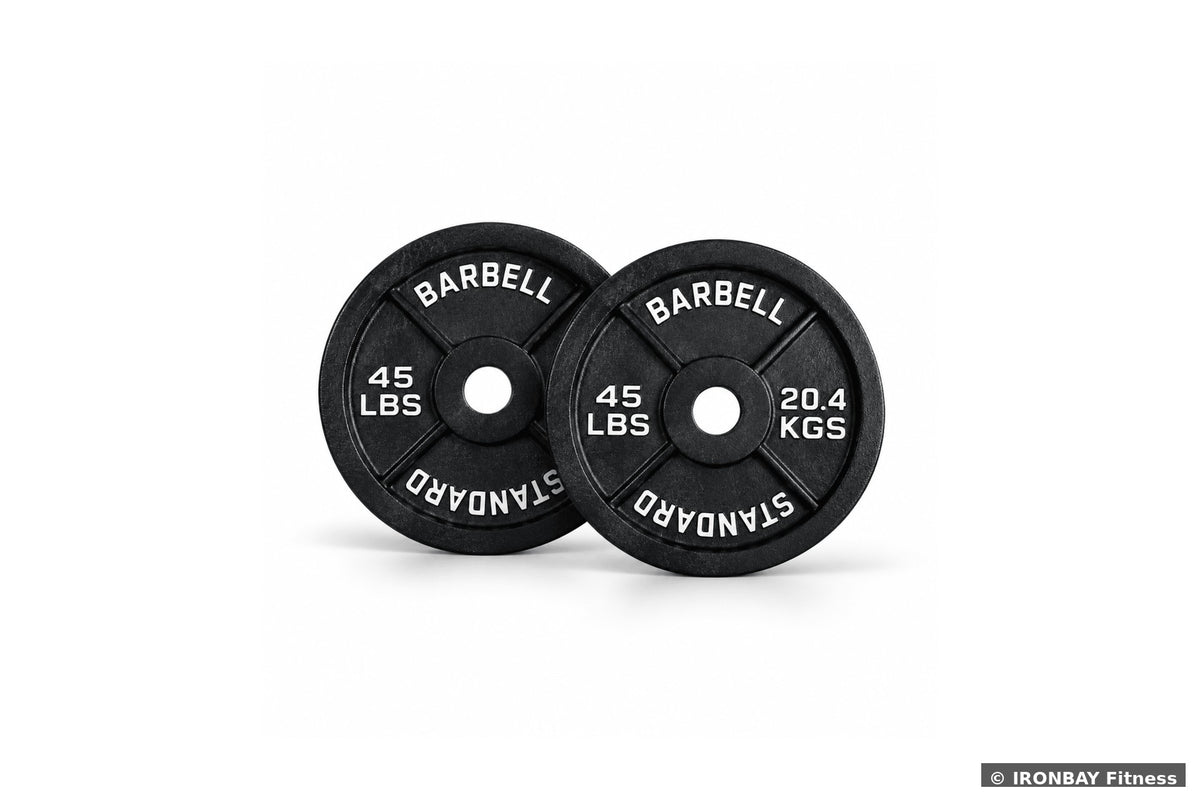
Move 2, plate pinch hold, pinch grip. Stand a cast iron plate on its edge, pinch the rim with your thumb on one side and fingers on the other, and lift it clear of the floor. Hold 20 to 30 seconds per hand, 3 sets. Start with one 5 lb plate. A 5 lb pair is $12.00 and a 10 lb pair is $24.00. The plates in the cover photo are 45 lb plates. Do not start there. Pinch weight goes up in small steps.
Move 3, kettlebell wrist extension, wrist control. Sit down and rest your forearm on your thigh, wrist just past your knee, palm down. Hold a light kettlebell by the handle and raise the back of your hand up, then lower it slow. Do 8 to 10 reps, 2 sets per side. Start at 5 to 10 lb. IRONBAY Kettlebells are solid cast iron with a rust resistant finish, $8.00 for 5 lb and $16.00 for 10 lb. The bell in the photo below is 50 lb. That is a photo of the product, not a starting weight for wrist work.

© IRONBAY Fitness. Images not for commercial use.
Move 4, battle rope waves, grip endurance. Hold the rope ends and make small, fast waves for 20 seconds, 3 sets. Your hands have to hold on while your arms keep moving, which is a different test from a still hold. The IRONBAY Battle Rope is $150.00 and is built for waves, slams, and pulls.
Advanced option, plate catch. Only after your pinch holds are solid. Hold a light plate at waist height over a mat or a soft floor, let it drop a short distance, and catch it with the other hand by the rim. Do 5 catches per hand, 2 sets. Keep it low, keep it light, and skip it if you train over a hard floor with bare feet.
What Weight Should You Start With?
Use time, not pride. If you cannot hold a dumbbell for 20 seconds, it is too heavy for hold work. If a pinch hold lasts over 40 seconds with clean form, go up one plate size. For wrist extension, pick a weight that lets you finish 10 slow reps with no sharp pain. Small jumps work best for hands and forearms, and tendons adapt slower than muscles, so add weight every 2 weeks at most.
What You Need
Shop IRONBAY Cast Iron Plates, from $6.00 for a 2.5 lb pair. Thin profile, fits 2 in Olympic bars, Lifetime Personal Warranty. Add Hex Dumbbells for holds and carries, and a light Kettlebell for wrist work. Calgary local pickup and Canada wide shipping are available. Shop online now.
FAQ
Why do my hands give out before my back on deadlifts and rows?
Your support grip is the weak link in the chain. The back and legs can often lift more than the hands can hold. Timed holds and carries, 2 times a week, train that link directly.
Do lifting straps help or hurt grip training?
Both, at different times. Straps take grip out of a heavy set, so your back can work harder. Use them on your heaviest back sets if you like, but do your grip session without straps, or the grip never gets the work.
What is the difference between pinch grip and support grip?
Support grip is wrapping your fingers around a handle and holding on, like a dumbbell hold. Pinch grip is thumb against fingers on a flat edge, with no handle, like holding a cast iron plate by its rim. They feel different because they are different skills, so train both.
How often should I train grip at home?
Two short sessions a week is enough for most people, with at least one rest day between them. Hands and forearms are small muscles and they also work in every pulling session you already do.
Updated November 13, 2026. New to training, or have a hand, wrist, or elbow issue? Check with a coach or physio before you start. Stop if you feel sharp pain.


