

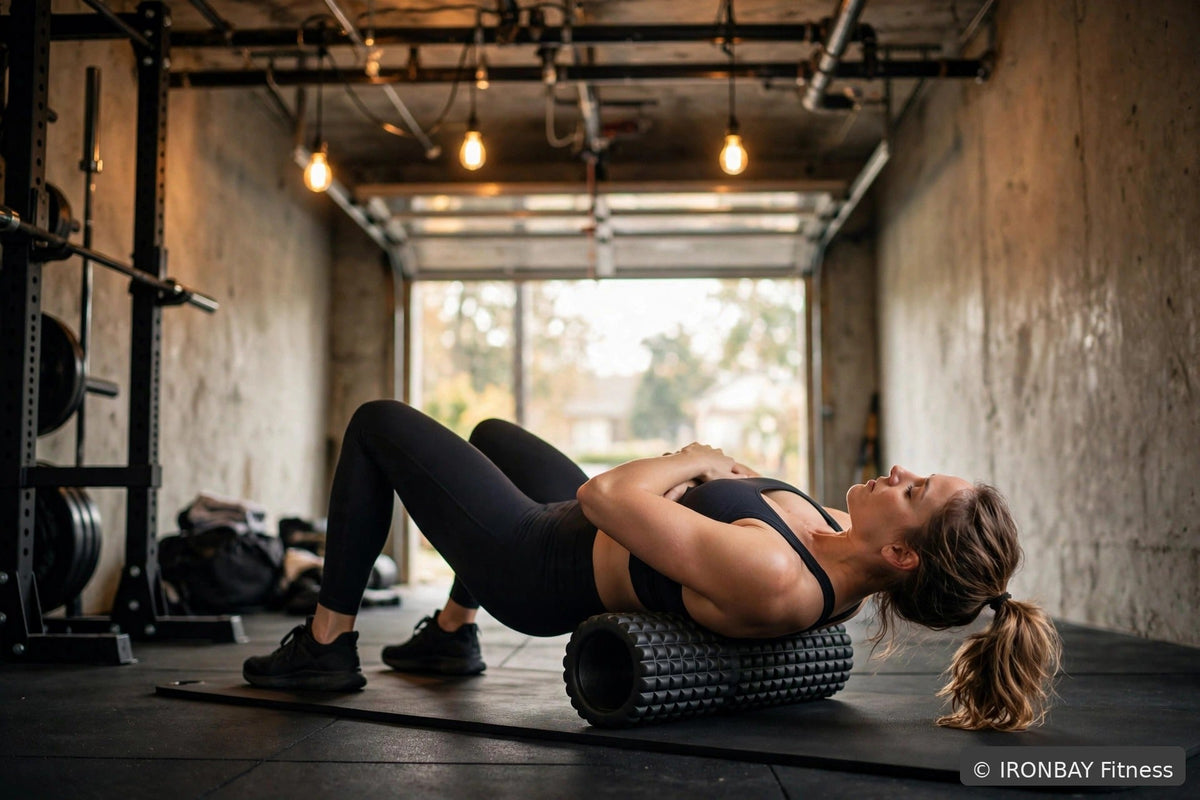
Reformer Pilates is all over social media right now — and so is the home hack. Put a foam roller under your spine or your feet, and basic moves turn into unstable, core-burning work.
It is not a reformer. But it trains the same thing: deep core control, slow movement, and full-body awareness. This 20-minute foam roller workout at home blends Pilates-style core moves with classic foam rolling. Seven moves. One roller. Zero guesswork.
Key Takeaways
- 7 moves × slow, controlled reps = a 20-minute home foam roller workout for core, mobility, and recovery.
- A foam roller under your spine or feet adds instability — that is what makes Pilates-style moves work without a reformer.
- The #1 mistake is rolling too fast. Eight slow rolls beat thirty fast ones. Breathe, and never roll directly on a joint or your lower back.
The Workout (20 Minutes)
Go in order. Rest 30 seconds between moves. New to this? Cut every rep count in half for week one.
- 0:00 — Roller deadbug. 8 reps per side. Spine along the roller, slow and wobbly.
- 3:00 — Roller glute bridge. 12 reps. Feet on the roller, hips up, squeeze two seconds.
- 6:00 — Thoracic opener. 10 slow passes. Roller across the mid-back, open the chest.
- 9:00 — Quad roll. 8 slow rolls per leg. Hip to just above the knee.
- 12:00 — IT band roll. 8 slow rolls per side. Gentle — this one is spicy.
- 15:00 — Glute roll. 30 seconds per side. Figure-4 seated position.
- 17:30 — Calf roll + long stretch. 8 rolls per leg, then a 60-second full-body stretch to finish.
The 7 Moves, Step by Step
1. Roller deadbug. Sit on the floor, place the roller lengthwise behind you, and lie back so your whole spine rests on it — head included. Knees bent, feet flat. Raise both arms toward the ceiling. Now slowly extend your right arm overhead and your left leg long, keeping your ribs down. Return, switch sides. The roller wobbles. That wobble is the workout: your deep core has to stabilize every rep.
2. Roller glute bridge. Lie on your back, roller crosswise under your feet, knees bent. Press through your heels and lift your hips until your body forms a straight line from shoulders to knees. Squeeze your glutes hard for two seconds at the top. Lower slowly. The roller wants to slide — fight it with your hamstrings and glutes.
3. Thoracic opener. Place the roller across your mid-back (perpendicular to your spine), hands lightly behind your head. Lean back over the roller and take a big exhale. Roll two inches down your back, lean back again. Ten slow passes from mid-back to just below the shoulder blades. Never roll your lower back or your neck directly on the roller.
4. Quad roll. Face down, roller under your thighs, forearms on the floor. Roll slowly from hip to just above the knee — eight passes per leg. When you hit a tender spot, stop and breathe on it for five seconds instead of rushing past.
5. IT band roll. Lie on your side, roller under your outer thigh, bottom leg straight, top foot planted on the floor in front for support. Roll from hip to knee, eight slow passes per side. Keep the pressure moderate. Sharp pain means back off — this area does not need force, it needs patience.
6. Glute roll. Sit on the roller, cross your right ankle over your left knee (figure-4), and lean into your right hip. Make small, slow shifts instead of big rolls — 30 seconds per side. This one finds the spots sitting all day creates.
7. Calf roll + long stretch. Seated, roller under your calves, hands behind you on the floor. Roll from ankle to knee, eight passes per leg. Then lie back, legs long, arms stretched overhead on the floor — the long stretch. Hold 60 seconds and breathe deep. Done.
The #1 Foam Roller Mistake
Rolling too fast. Most people treat a foam roller like a rolling pin and zip up and down in two seconds. Speed kills the benefit — the muscle never gets a chance to release.
Go slow. One full pass should take about five seconds. Pause and breathe on tender spots. Skip joints and the lower back entirely. Eight slow rolls beat thirty fast ones, every time.

© IRONBAY Fitness. Images not for commercial use.
What You Need
One foam roller. That is the entire home gym for this workout — no reformer, no rack, no extras.
IRONBAY Foam Roller — $18.00. 17.7" × 4.7" (45 × 12 cm) with a textured grid surface for targeted pressure. Compact enough to slide under a bed. Shop the Foam Roller
Shop online now. IRONBAY Fitness opens Nov 1, 2026.
FAQ
Can a foam roller replace a Pilates reformer?
No — and do not let anyone sell you that idea. A reformer has springs, straps, and a moving carriage. A foam roller gives you instability training for deep core control, which is a solid home stand-in for core work, not a replacement for the machine.
Should I foam roll before or after a workout?
Both work. Before training, spend 3–5 minutes on the muscles you are about to use — it wakes them up. After training, go slower for 5–10 minutes to wind down. This 20-minute session also works great as a standalone recovery day.
Is foam rolling supposed to hurt?
Pressure, yes. Sharp pain, no. Aim for a 6 or 7 out of 10 on the "good hurt" scale. Back off if you feel shooting pain, numbness, or pain in a joint — and never roll directly on your lower back or neck.
How often should I use a foam roller?
Daily is fine. Rolling is low-impact, so 5–10 minutes a day beats one long session a week. Consistency matters more than intensity here.
Updated: October 10, 2026. New to training or coming back from an injury? Check with a coach or physio before you start.


