

Your teen wants to lift. That is good news. The real question is not yes or no. The real question is how to start in a way that is safe, simple, and easy to stick with at home.
Strength training at home for teens works best with light weight, clean form, and an adult nearby for the first weeks. No max lifts. No ego lifting. Just basic moves, done well, two or three days per week.
Key Takeaways
- Start with bodyweight and light gear first. Bands and light dumbbells teach the moves before heavy weight enters the picture.
- Use the 10 clean reps rule. If a teen cannot do 10 reps with clean form, the weight is too heavy for that move today.
- A safe starter kit is small. One light band, one light pair of dumbbells, and one mat cover the whole plan in this guide.
The Workout: 25 Minutes, 5 Moves
Train 2 days per week to start, with at least one rest day between sessions. A parent or adult should watch the first 2 to 3 weeks, until every move looks clean without coaching.
- Bodyweight squat, 3 sets of 10 reps. Feet shoulder width apart. Sit back and down like you are sitting into a chair. Knees track over toes. Stand tall. Rest 60 seconds between sets. No weight until all 30 reps look the same.
- Band row, 3 sets of 10 reps. Stand on the middle of a long loop band. Hold one side in each hand. Hinge forward a little with a flat back. Pull elbows back past the ribs, pause one second, then lower slow. This builds back and posture strength.
- Light dumbbell press, 3 sets of 8 reps. Sit tall on a bench. Hold one light dumbbell in each hand at shoulder height. Press up, lower slow for 3 seconds. Start light. Shaky arms mean the weight is too heavy.
- Light kettlebell hinge, 3 sets of 8 reps. Put a light kettlebell between the feet. Push the hips back, keep the back flat, grab the handle, and stand up. The bell stays close to the body. This teaches the hip hinge, the base move for safe lifting.
- Push-up or bench push-up, 3 sets of 6 to 10 reps. Hands under shoulders, body in one line. If floor push-ups break form, use the bench edge to make the move easier. Clean reps only. Stop the set when form breaks.
Cool down for 2 minutes. Walk, breathe slow, and stretch calves, chest, and hip flexors. Stop any move that causes sharp pain. Sore muscles the next day are normal. Sharp pain is not.

© IRONBAY Fitness. Images not for commercial use.
What Weight Should a Teen Start With?
Use the 10 clean reps rule for every move. Pick a weight that allows 10 reps with clean form and still leaves 2 good reps in reserve. If form breaks at rep 6, go lighter. There is no prize for heavy weight in the first month.
Common starting points only: the Yellow band at 5 to 15 lb for rows, a 5 lb or 10 lb dumbbell single for presses, and a 5 lb or 10 lb kettlebell for hinge practice. These are starting points, not rules. Age, size, and sport background all change the right start. When all sets look clean two sessions in a row, move up one small step.
Skip max lifts. A teen does not need a one-rep max test at home. Add reps first, then add the smallest weight step.
What You Need
Bands first. IRONBAY resistance bands are long loop bands, 2080 mm in full length. Yellow 5 to 15 lb is $10. Red 15 to 30 lb is $13. Bands are quiet, light, and easy on joints while a teen learns each move.
Light hex dumbbells. IRONBAY hex dumbbells cost $0.88/lb. A 5 lb single is $4.40 and a 10 lb single is $8.80, so a light pair costs $8.80 to $17.60. Hex heads do not roll on the floor. In this guide, only the 5 to 80 lb sizes are listed for sale right now.
One light kettlebell. IRONBAY kettlebells are solid cast iron with a Lifetime Personal Warranty. The 5 lb bell is $8 and the 10 lb bell is $16. In this guide, only the 5 to 50 lb sizes are listed for sale right now.
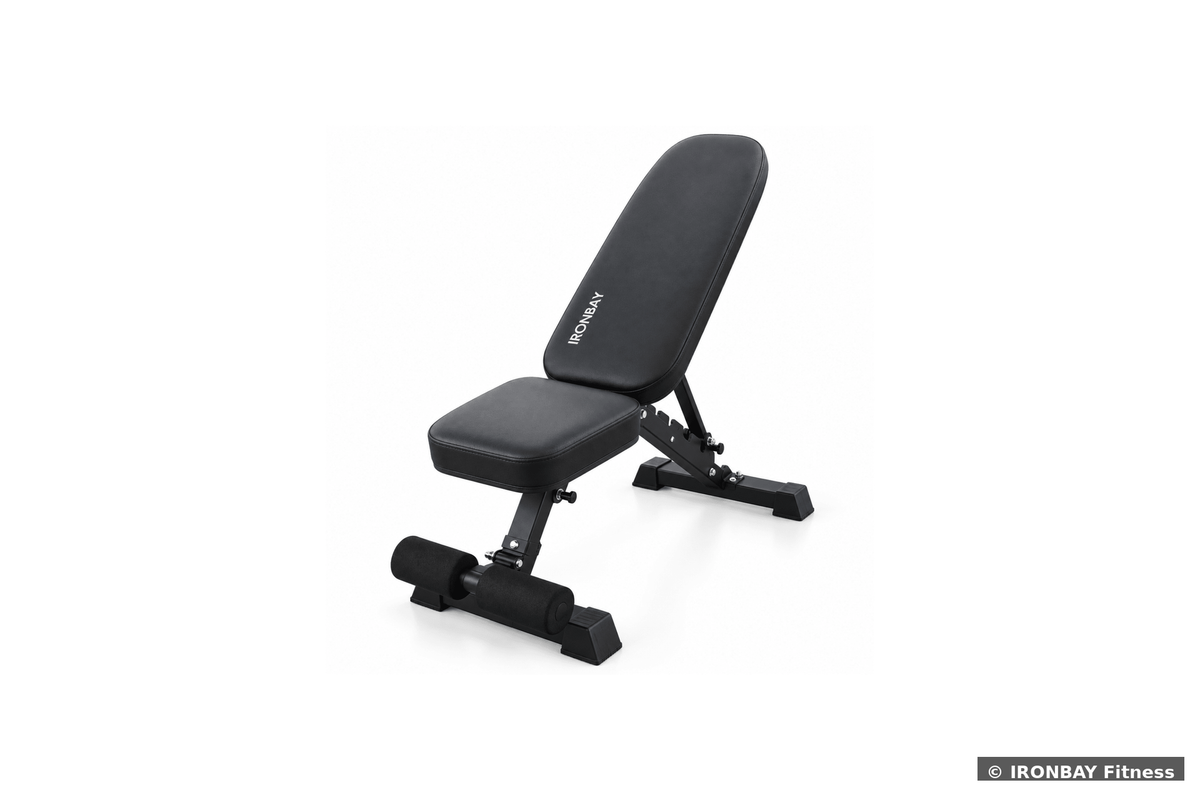
A bench and a mat. The IRONBAY N02 adjustable bench is $99. It gives a firm seat for presses and a raised edge for easier push-ups. One 38 by 38 inch gym mat is $45 and gives feet and gear a grippy base that protects the floor.
A simple starter kit adds up clean. Yellow band $10 plus a pair of 5 lb hex dumbbells $8.80 plus a 5 lb kettlebell $8 plus one 38 inch mat $45 equals $71.80. Add the bench later, or when you want a firm seat for presses.
Shop online now.
FAQ
Does lifting weights stunt a teen's growth?
Light, supervised training with clean form is a common and accepted way for teens to get stronger. The risk comes from max lifts, bad form, and no supervision. Keep weight light, keep reps clean, and skip one-rep max tests at home. If your teen has a health condition or a past injury, check with a doctor first.
How old should a teen be to start?
There is no single magic age in this guide. Readiness is about control, not just age. A teen who can squat, hinge, and push with clean bodyweight form, and who will follow rules and stop when told, is ready to add light gear. A teen who cannot yet control bodyweight moves should stay with bodyweight and bands.
How many days per week should a teen train?
Two days per week is a strong start. Keep at least one rest day between sessions. After 3 to 4 steady weeks with clean form and good recovery, a third short day is fine.
What should a parent watch for?
Watch form first. Back flat on hinges and rows, knees tracking over toes on squats, and no holding breath and straining on light reps. Watch attitude too. If a teen wants to jump weight fast to match a video online, that is the moment to slow down and go back to the 10 clean reps rule.
Updated November 8, 2026. This guide is general information for home training, not medical advice. Teens with a health condition, growth concern, or past injury should check with a doctor or physio before starting.


