

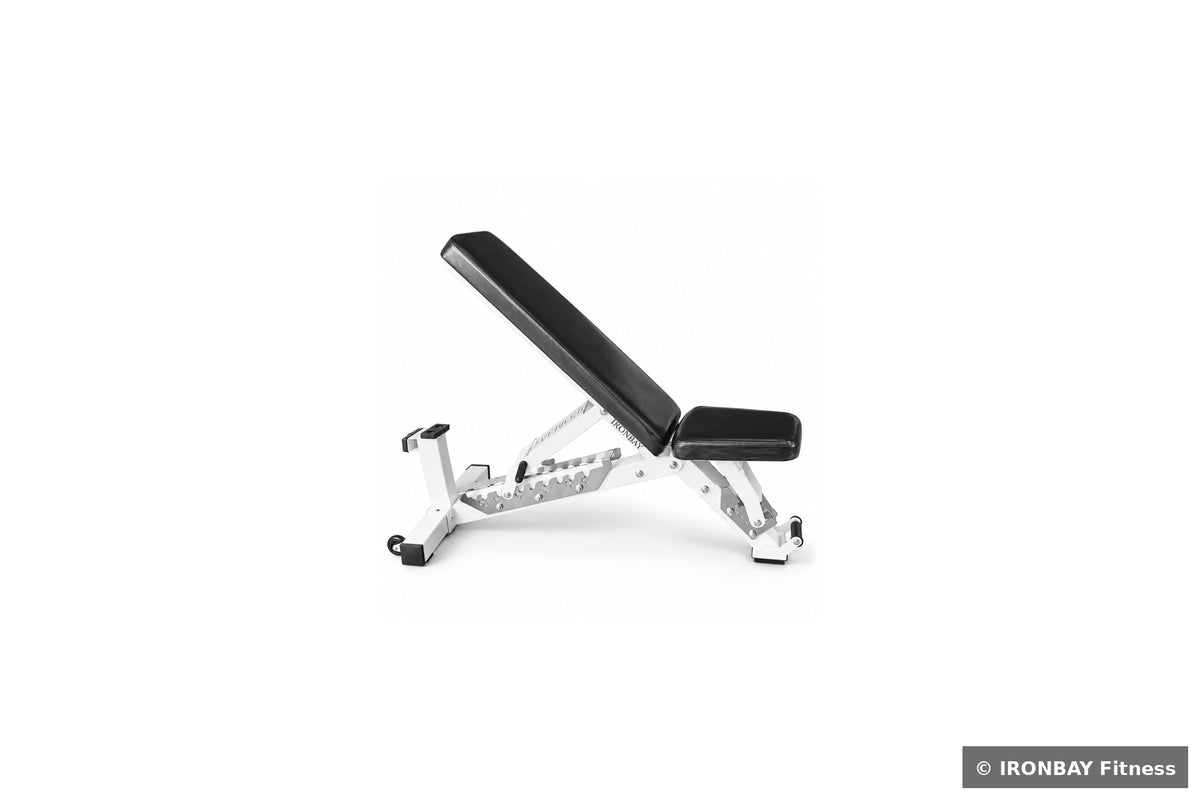
You do not need five machines to train your whole body at home. You need one solid bench, one pair of dumbbells, and 30 minutes.
This workout uses the IRONBAY N04 Heavy-Duty Adjustable Bench. Set it flat for pressing and pulling. Set it to incline for upper chest, shoulders, and supported rows. Change the angle, not the equipment. That angle change is the whole trick behind the one bench, full body format that is all over home gym content right now.
Key Takeaways
- 6 moves, 3 rounds, about 30 minutes. One bench, one pair of dumbbells.
- Flat = chest and back thickness. Incline = upper chest, shoulders, and supported rows.
- Pick a weight you can lift for 10 clean reps with 2 reps left in the tank. If form breaks, go lighter.
The Workout (About 30 Minutes)
Do all 6 moves in order, 10 to 12 reps each. Rest 60 to 90 seconds between rounds. Do 3 rounds total. Warm up 3 minutes first: arm circles, leg swings, and 10 bodyweight squats.
- Flat dumbbell bench press (flat bench): 10 to 12 reps. Lie flat, feet on the floor. Lower the dumbbells to chest level, press up until your arms are straight but not locked hard.
- Incline dumbbell press (incline bench, about 30 to 45 degrees): 10 to 12 reps. Same press, steeper angle. Keep your back flat on the pad and your feet planted.
- Chest supported incline dumbbell row (incline bench, chest on the pad): 10 to 12 reps. Lie face down on the incline pad. Pull the dumbbells to your ribs, squeeze your shoulder blades, lower slow.
- Seated incline dumbbell shoulder press (incline bench): 10 to 12 reps. Sit tall, back on the pad. Press from shoulder height to overhead. Do not arch your lower back.
- Flat dumbbell pullover (flat bench): 10 to 12 reps. Hold one dumbbell with both hands over your chest. Lower it back behind your head with a slight bend in the elbows, then pull it back over your chest.
- Bench step up (flat bench): 10 reps each leg. Stand facing the bench. Step up with one foot, drive through the heel, stand tall, step back down with control. Switch legs.
Form Cues That Matter
Feet stay down. On every press and row, your feet stay flat on the floor. If your feet lift or your hips bounce, the weight is too heavy.
Move slow on the way down. Take 2 seconds to lower each rep. Fast drops waste the best part of the lift.
Lock the bench before you lift. Check the backrest is locked in place before every set, especially when you change from flat to incline.

© IRONBAY Fitness. Images not for commercial use.
What You Need
One adjustable bench and one pair of dumbbells. The N04 is a heavy duty adjustable bench with a heavy steel frame, high density padding, and a wide support structure. It supports flat and incline positions, which is exactly what this workout uses.
Shop the IRONBAY N04 Heavy-Duty Adjustable Bench, $400.
Pair it with IRONBAY Hex Dumbbells from $0.88/lb, for example a 10 lb dumbbell at $8.80.
Shop online now. IRONBAY Fitness opens Nov 1, 2026.
FAQ
Can one bench really train your whole body at home?
Yes, for a general strength workout. Flat and incline angles change which muscles work hardest, and step ups add leg work. Add a barbell or a rack later if you want heavier leg training.
What is the difference between flat and incline on this bench?
Flat keeps your back level with the floor and loads the chest and back evenly. Incline raises the backrest to about 30 to 45 degrees and shifts more work to the upper chest and shoulders, and it lets you row with your chest supported.
How heavy should my dumbbells be for this workout?
Start with a pair you can press for 10 clean reps with 2 reps left in the tank. If the last reps break your form, go lighter. When all 3 rounds feel easy, go heavier next time.
How often should I do this workout?
2 to 3 days per week with at least one rest day between sessions works well. Keep the same 6 moves for 3 to 4 weeks, then add weight or a round.
Updated October 26, 2026. New to training or coming back from an injury? Check with a coach or physio before you start.


